
♞ Chess club for children · Iași
We develop your child’s intelligence through chess
Classes at the club, online and in schools, for children aged 4 to 16. Experienced coaches, groups by level and results at the highest level.
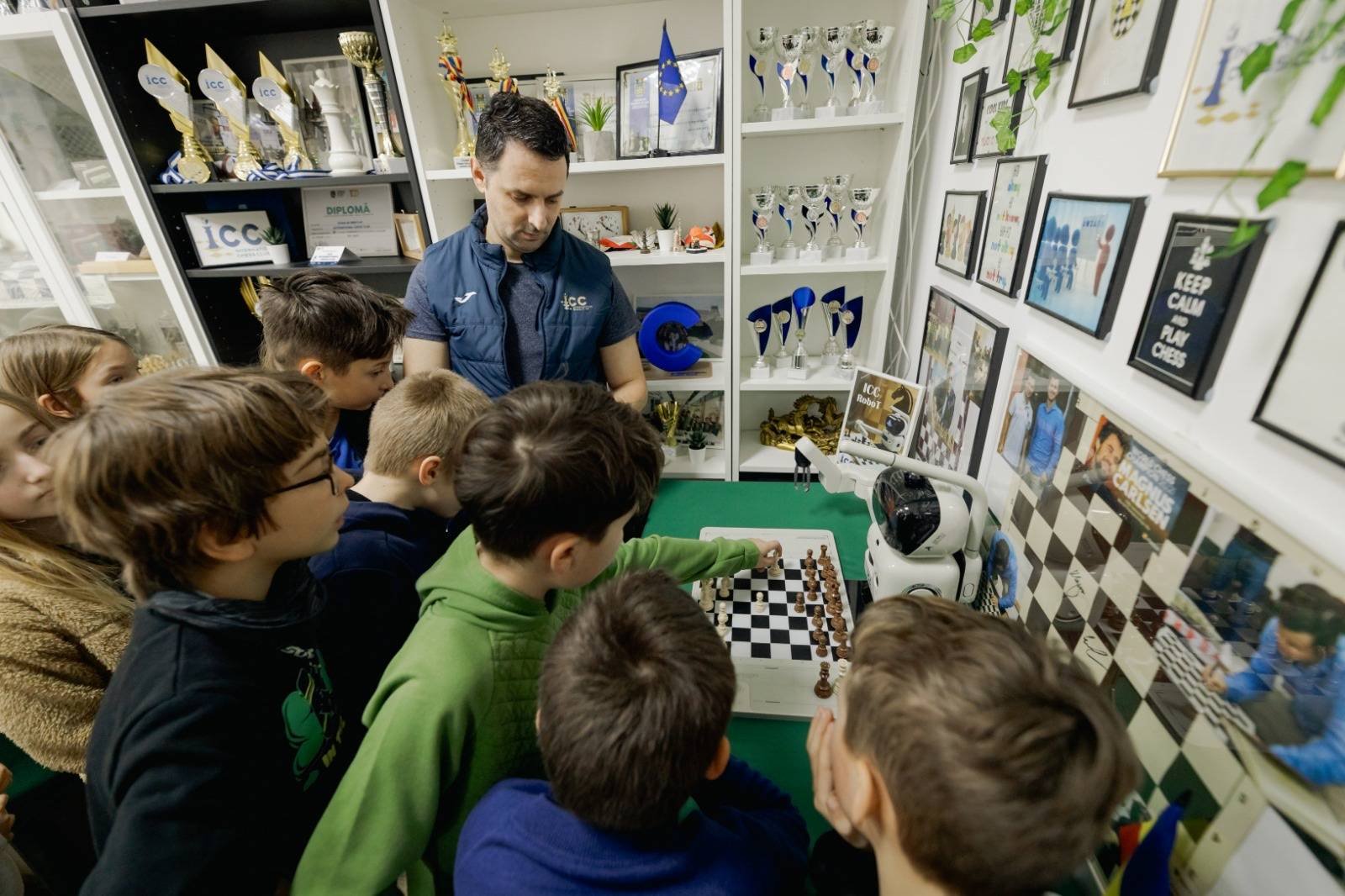
Choose International Chess Club
Our offer
Why choose us?
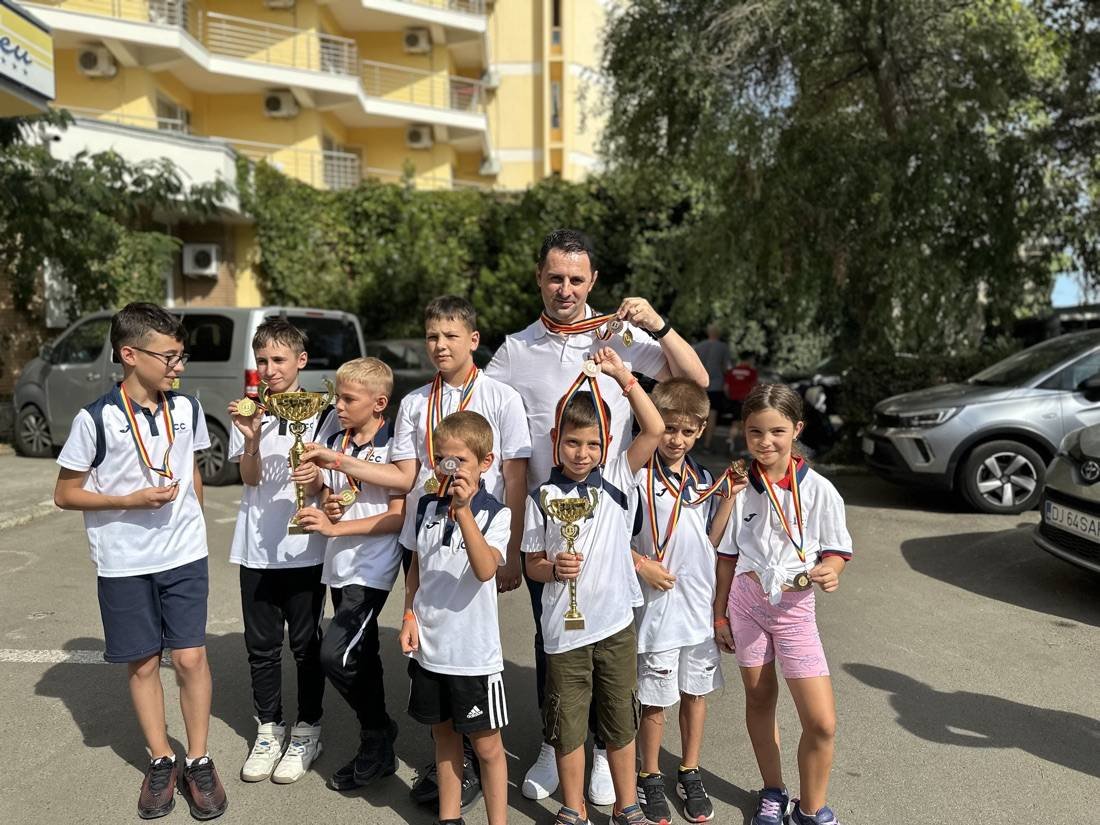
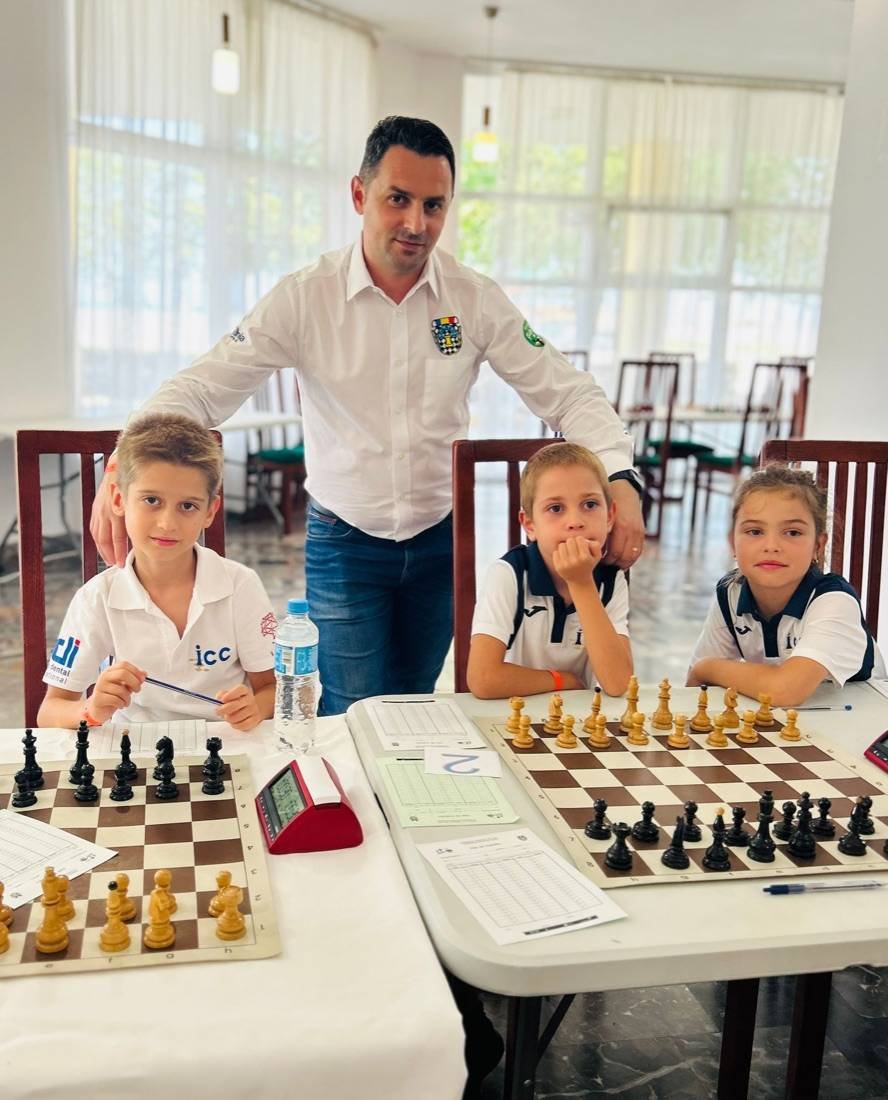
♞ Moments from the club
More than a game. A community.
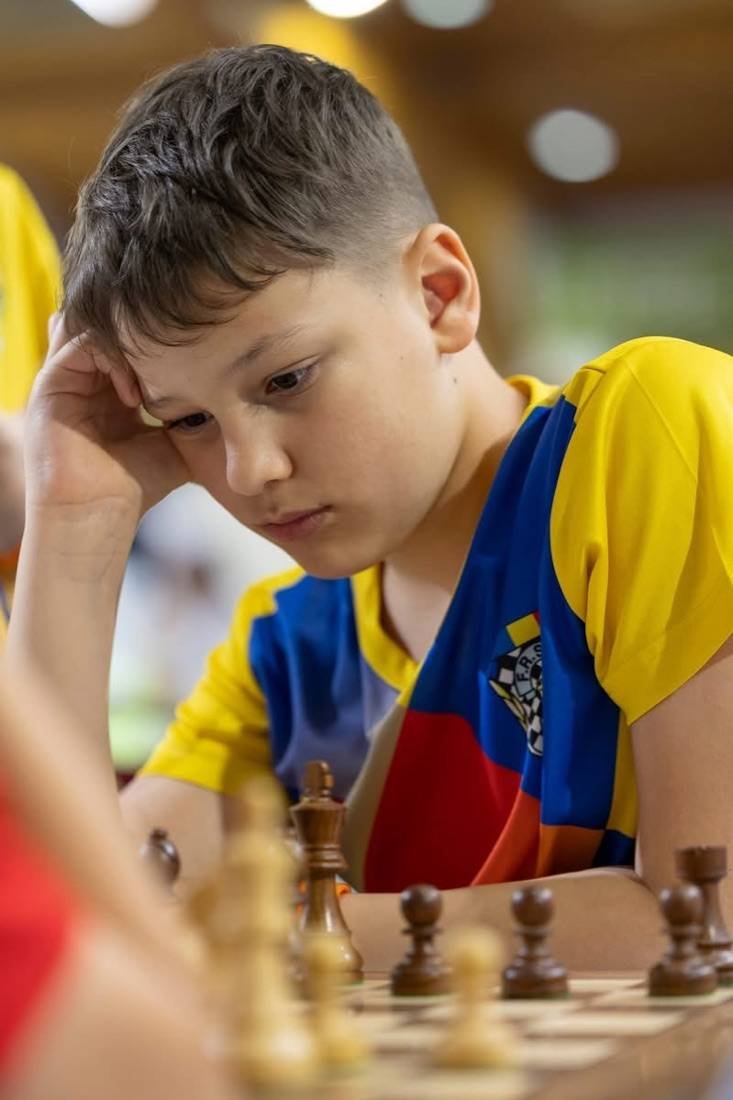
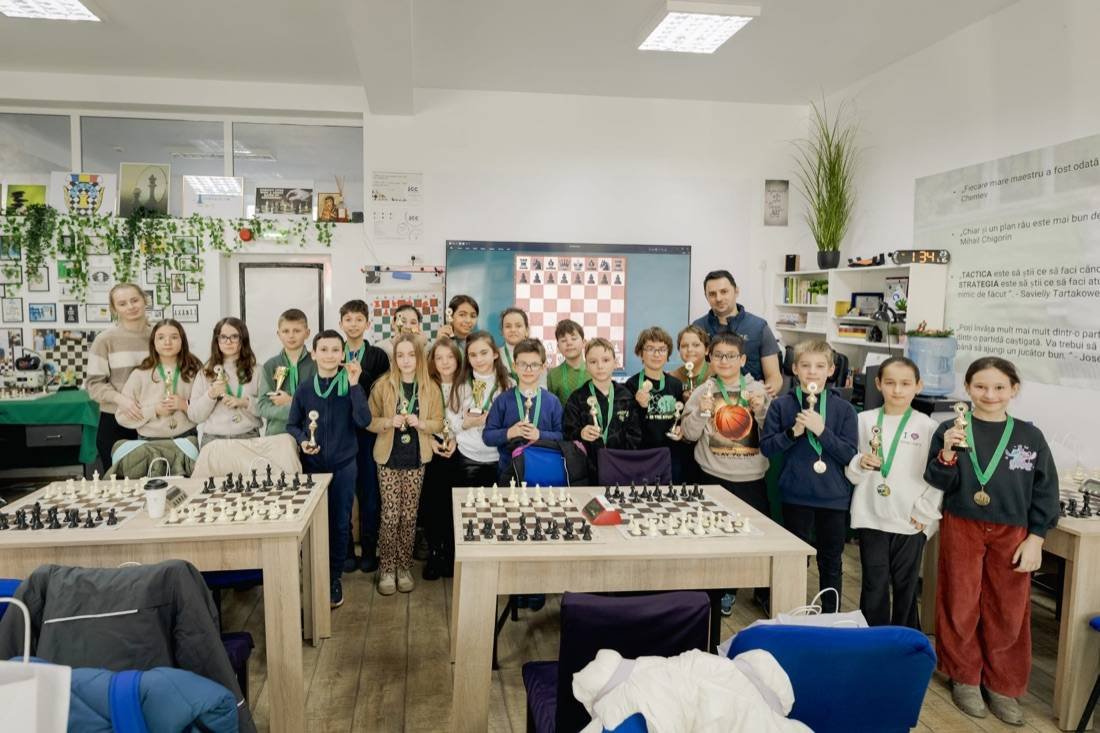
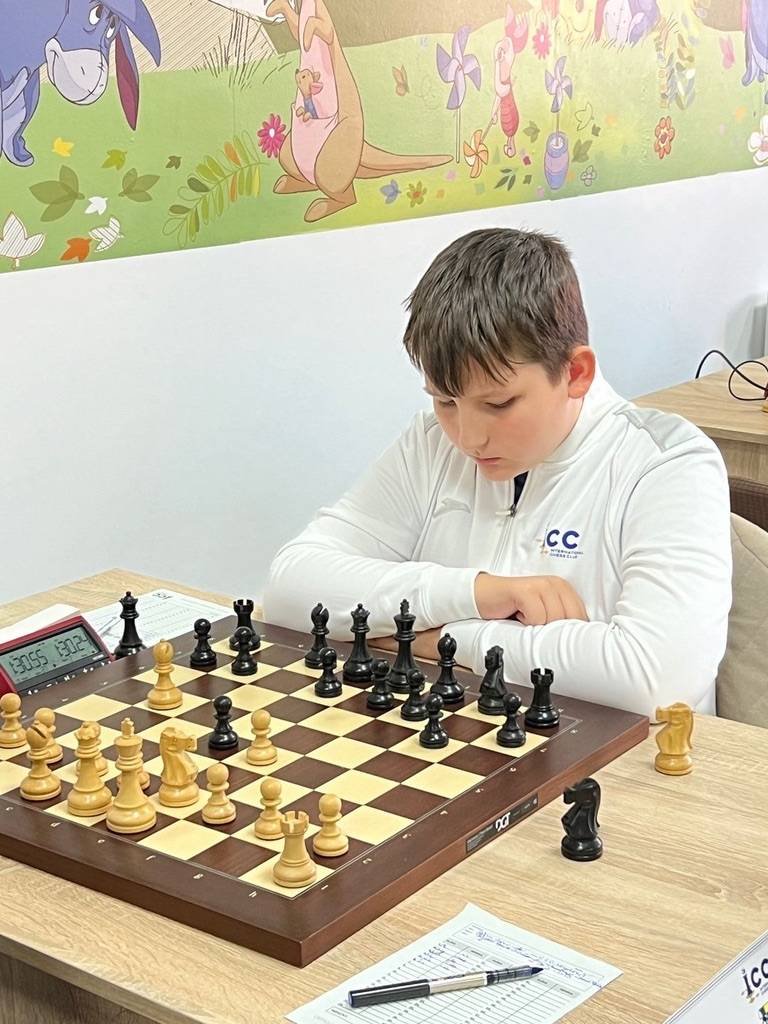
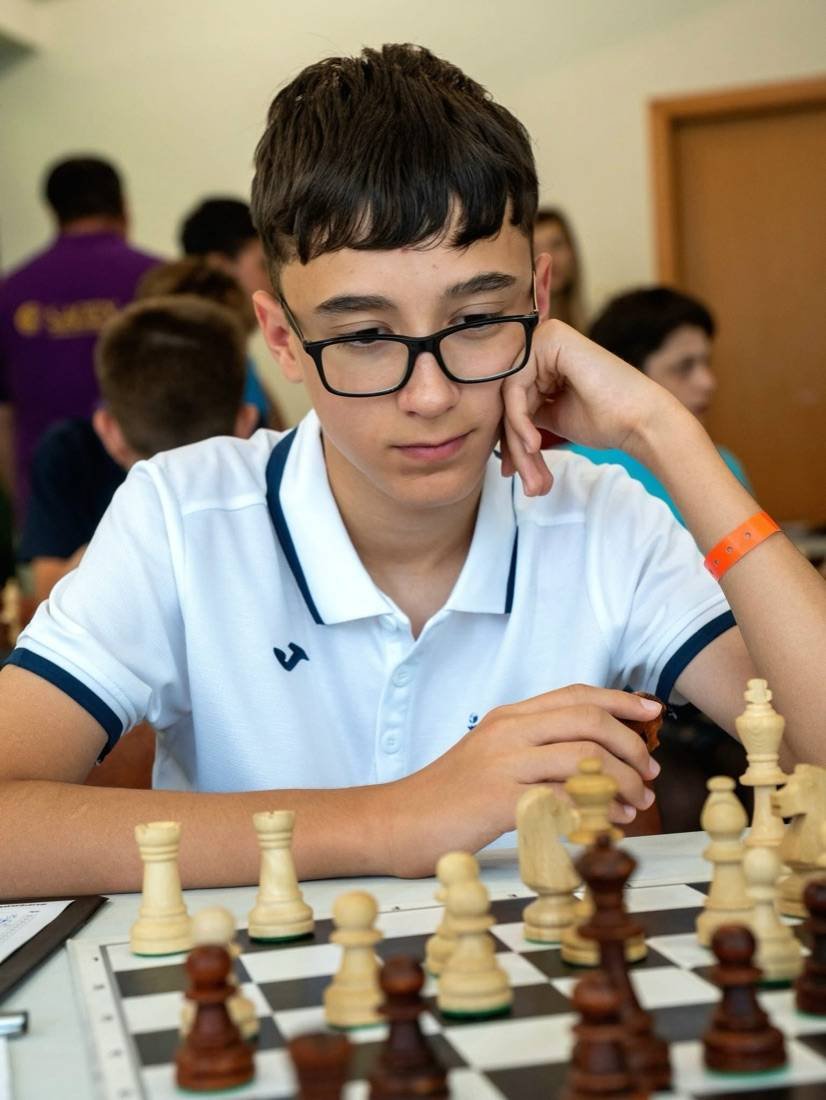
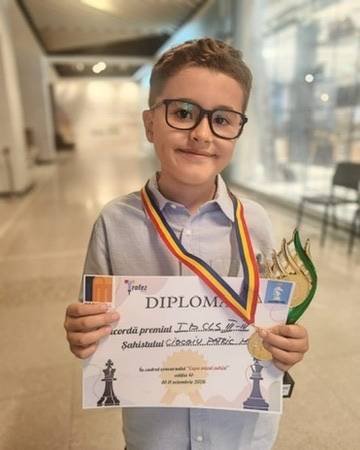
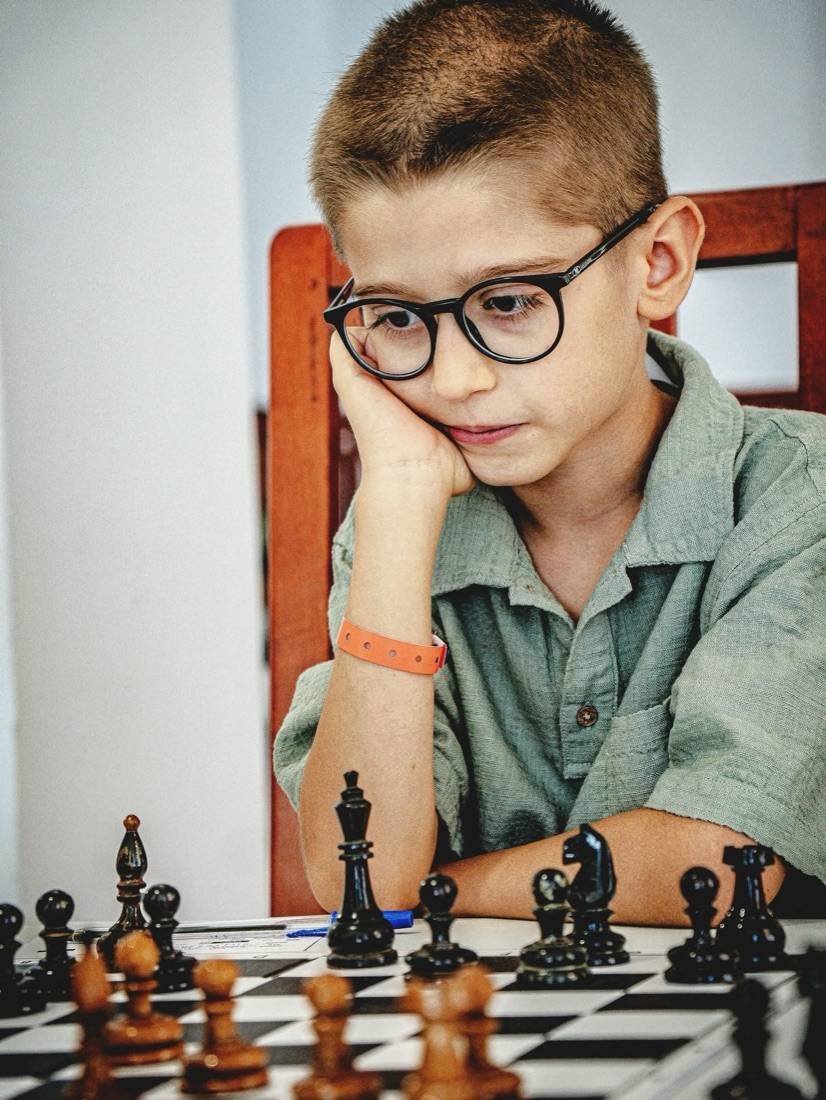
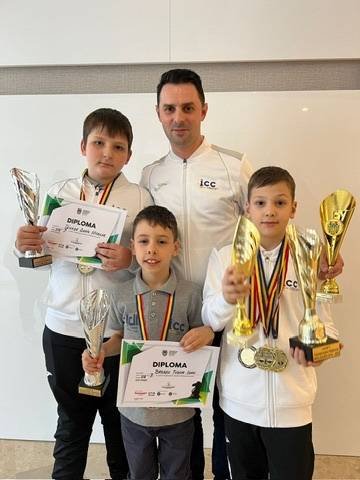
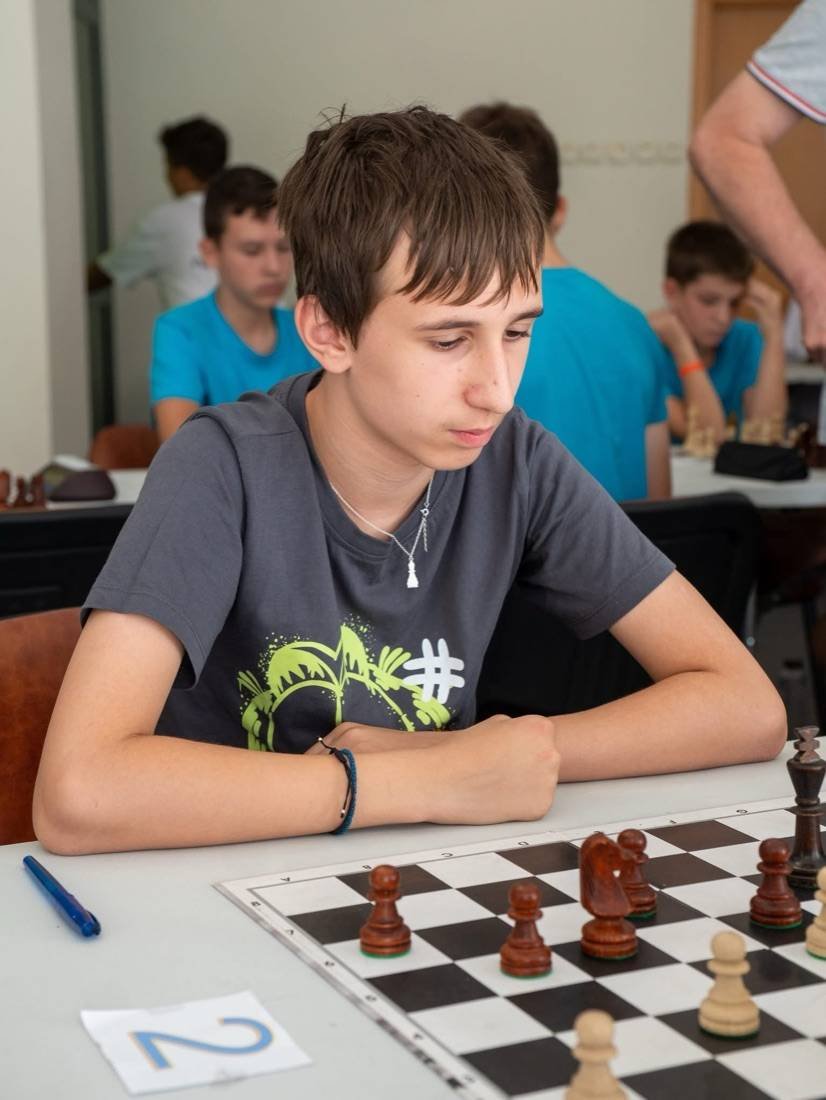
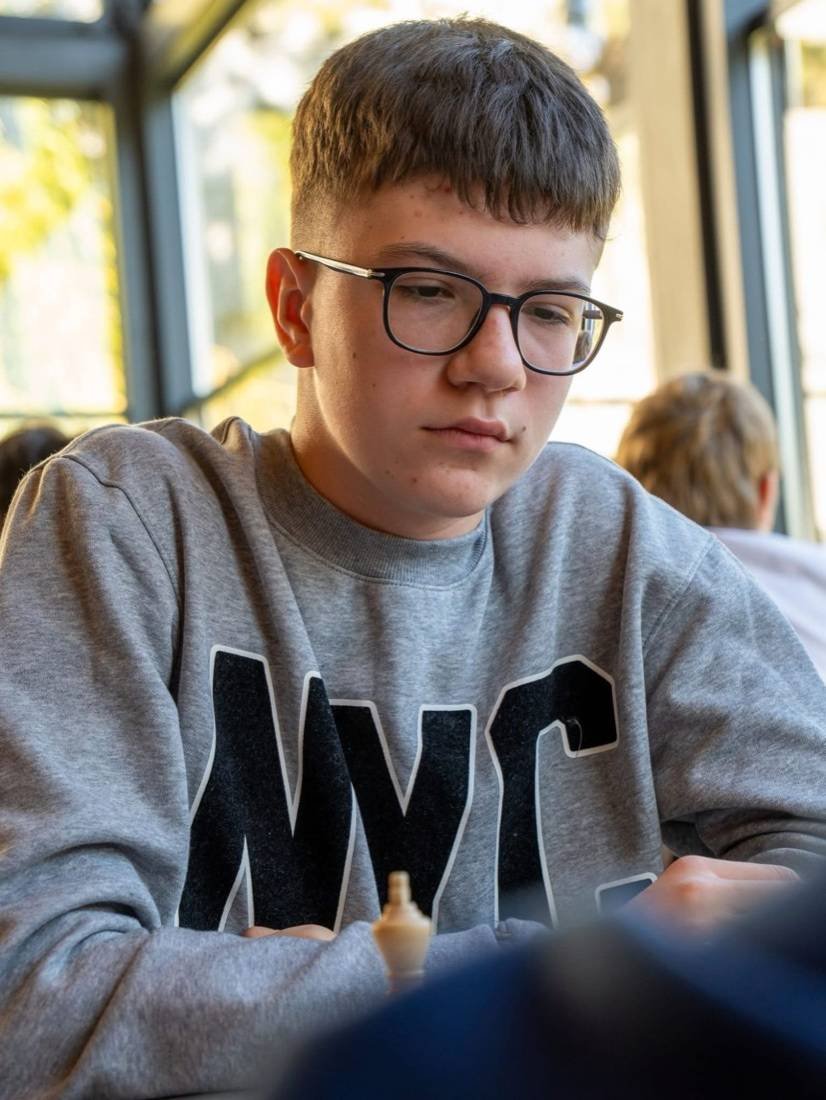
Our competitive players at tournaments and training, and pupils discovering chess at the club. This is International Chess Club Iași, from the first move to the podium.
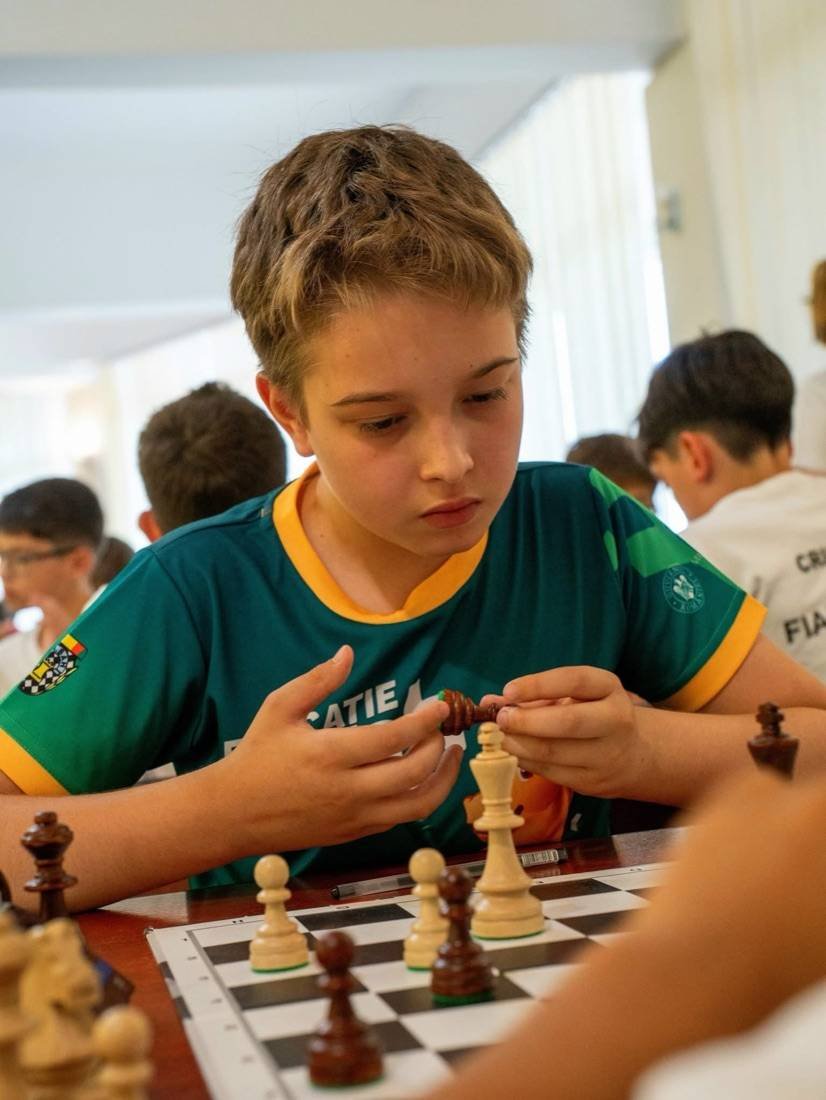
Weekly puzzles
Ready for the challenge?
Three new positions every Monday and Thursday: mate in one, two and three moves. Solve them on the board and send us your answers.

16 benefits. One game: Chess.
Concentration, memory, patience, discipline, managing emotions, confidence in one’s own decisions, respect, independence and many other skills that chess can develop.
But perhaps the most important thing is this: we don’t just teach children to play chess. We teach them to think.
 What chess brings ↻
Cognitive benefits
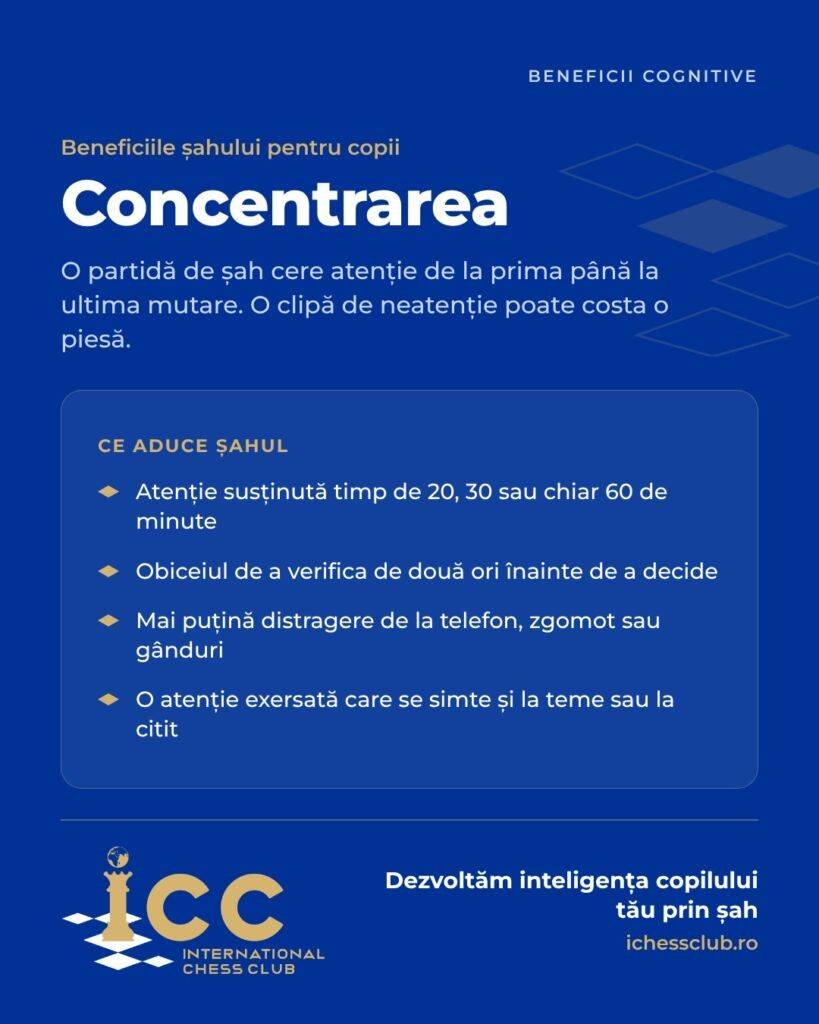
1. Concentration
A game of chess demands attention from the first move to the last. A moment of carelessness can cost a piece.
Read more
Children gradually learn to stay focused, notice details, follow what their opponent is doing and not rush when they have to make a decision.
With regular practice, the chessboard becomes real training for attention and patience. And the ability to stay focused matters not only in chess, but also at school and in everyday life.
What chess brings
- Sustained attention for 20, 30 or even 60 minutes
- The habit of checking twice before deciding
- Fewer distractions from phones, noise or wandering thoughts
- Trained attention that shows in homework and reading too
 What chess brings ↻
Cognitive benefits
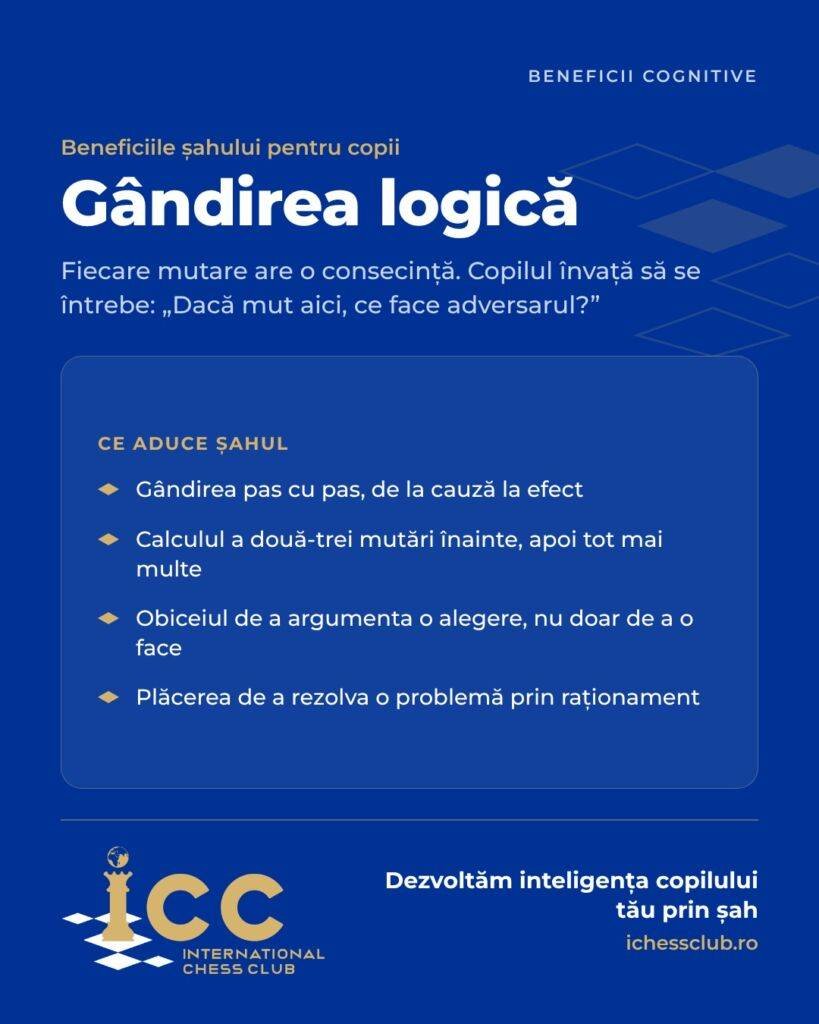
2. Logical thinking
Every move has a consequence. Children learn to ask: “If I move here, what will my opponent do?”
Read more
In chess it isn’t enough to move a piece. You have to understand why you make that move and what can happen next.
Children learn to compare options, recognise patterns and connect cause and effect. It is a continuous exercise in analysis and reasoning, played as a game.
What chess brings
- Step-by-step thinking, from cause to effect
- Calculating two or three moves ahead, then more and more
- The habit of explaining a choice, not just making it
- The joy of solving a problem through reasoning
 What chess brings ↻
Cognitive benefits
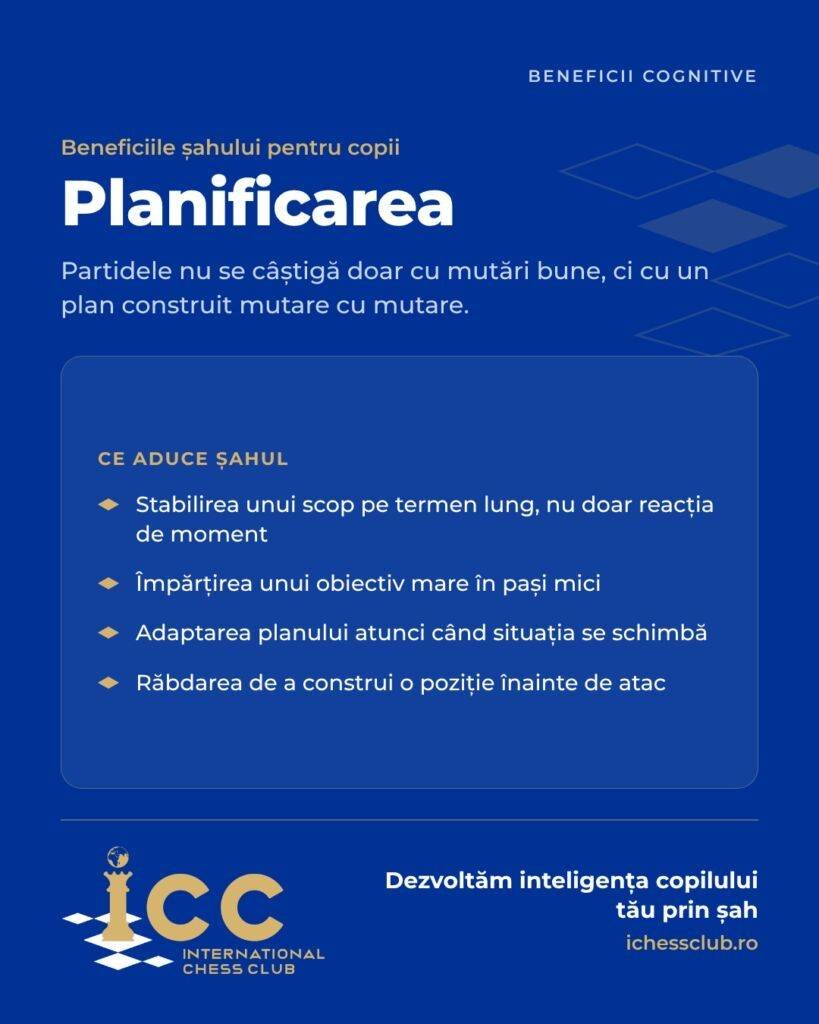
3. Planning
Games aren’t won with good moves alone, but with a plan built move by move.
Read more
In chess, children quickly discover that thinking only about the next move is not enough. They need a plan.
They learn to set a goal, anticipate what comes next and organise their actions to get there. It is one of chess’s most beautiful lessons: before you act, think about where you want to go.
What chess brings
- Setting a long-term goal, not just reacting in the moment
- Breaking a big goal into small steps
- Adapting the plan when the situation changes
- The patience to build a position before attacking
 What chess brings ↻
Cognitive benefits
4. Problem solving
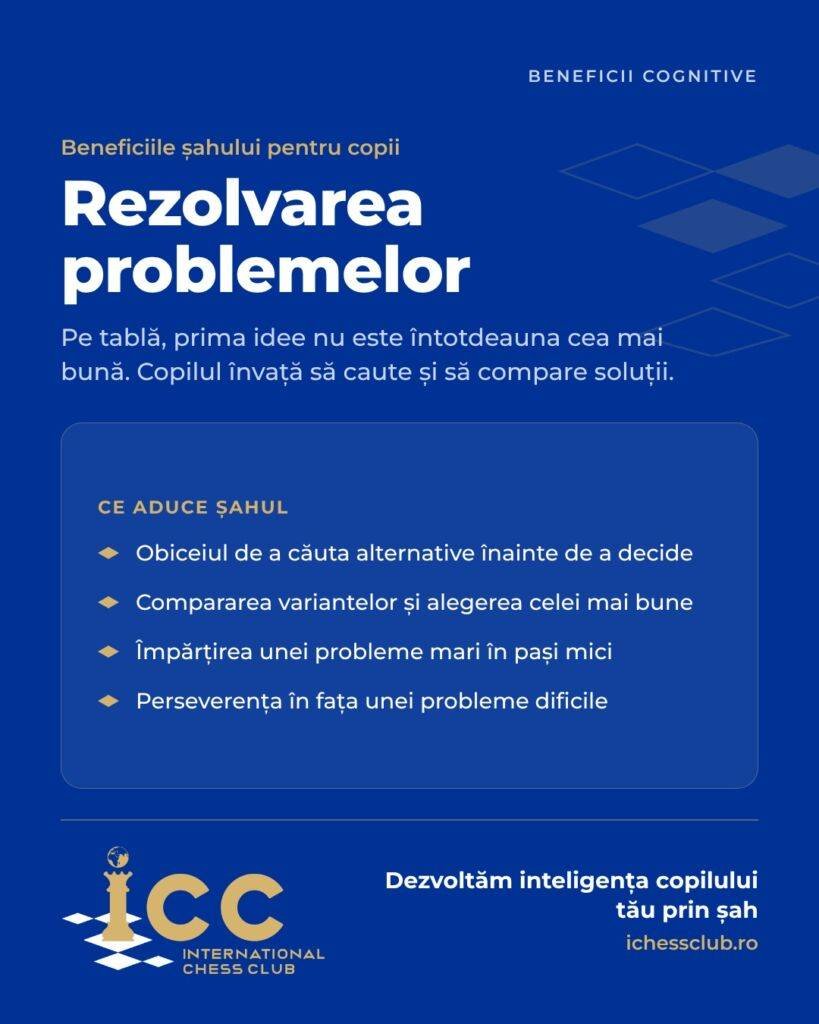
On the board, the first idea isn’t always the best. Children learn to look for and compare solutions.
Read more
Every chess position can become a small problem to solve. The child looks at the situation, searches for options, rules out the wrong ones and tries to find the best.
And they learn something else that matters: if the first idea doesn’t work, look for another. It is an extremely valuable mindset, far beyond the chessboard.
What chess brings
- The habit of looking for alternatives before deciding
- Comparing options and choosing the best one
- Breaking a big problem into small steps
- Perseverance in the face of a difficult problem
 What chess brings ↻
Cognitive benefits
5. Memory
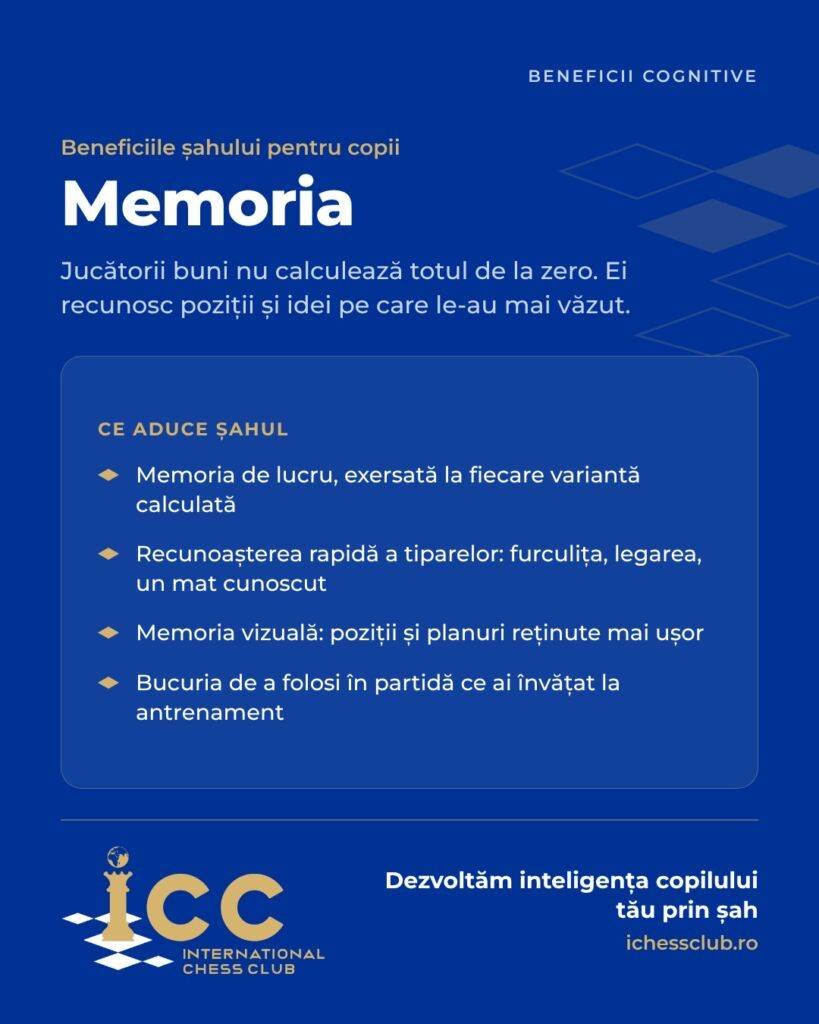
Good players don’t calculate everything from scratch. They recognise positions and ideas they have seen before.
Read more
A child who plays chess gradually starts to recognise positions, tactical patterns and ideas they have met before. They learn not only to memorise, but above all to recognise information and use it when they need it.
The more positions they play and solve, the richer their mental library becomes.
What chess brings
- Working memory, trained with every line calculated
- Quick pattern recognition: the fork, the pin, a familiar mate
- Visual memory: positions and plans remembered more easily
- The joy of using in a game what you learned in training
 What chess brings ↻
Cognitive benefits
6. Creativity
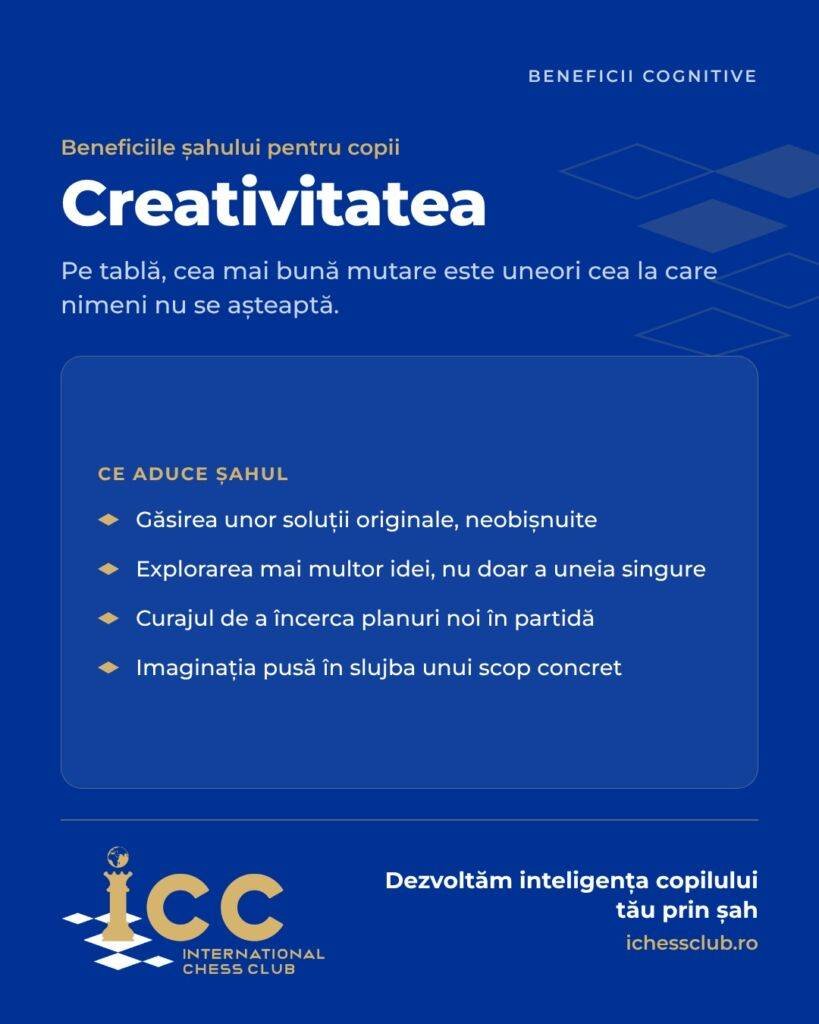
On the board, the best move is sometimes the one nobody expects.
Read more
Chess has very clear rules. But within those rules lies a huge world of possibilities. Children discover that the same problem can have different solutions, and they are encouraged to look for new ideas.
Logic and creativity are not opposites. In chess, they work together.
What chess brings
- Finding original, unusual solutions
- Exploring several ideas, not just one
- The courage to try new plans in a game
- Imagination put to work for a concrete goal
 What chess brings ↻
Emotional benefits
7. Thinking before acting
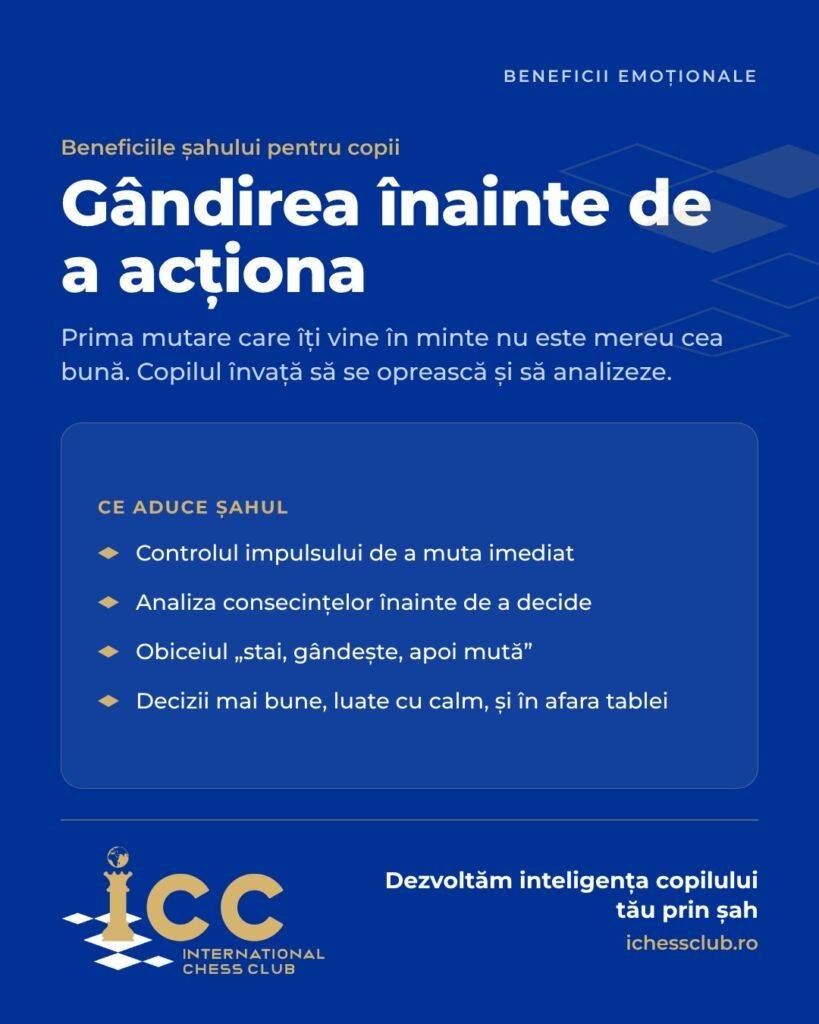
The first move that comes to mind isn’t always the right one. Children learn to stop and analyse.
Read more
Perhaps one of the most important lessons chess can give a child: stop, look, think, then act.
With every move, the child is encouraged to check what the opponent intends, what consequences their choice may have and whether there is a better option. Over time, a remarkable habit can form: not reacting straight away, but thinking before deciding.
What chess brings
- Controlling the urge to move straight away
- Analysing consequences before deciding
- The habit of “stop, think, then move”
- Better, calmer decisions, off the board too
 What chess brings ↻
Emotional benefits
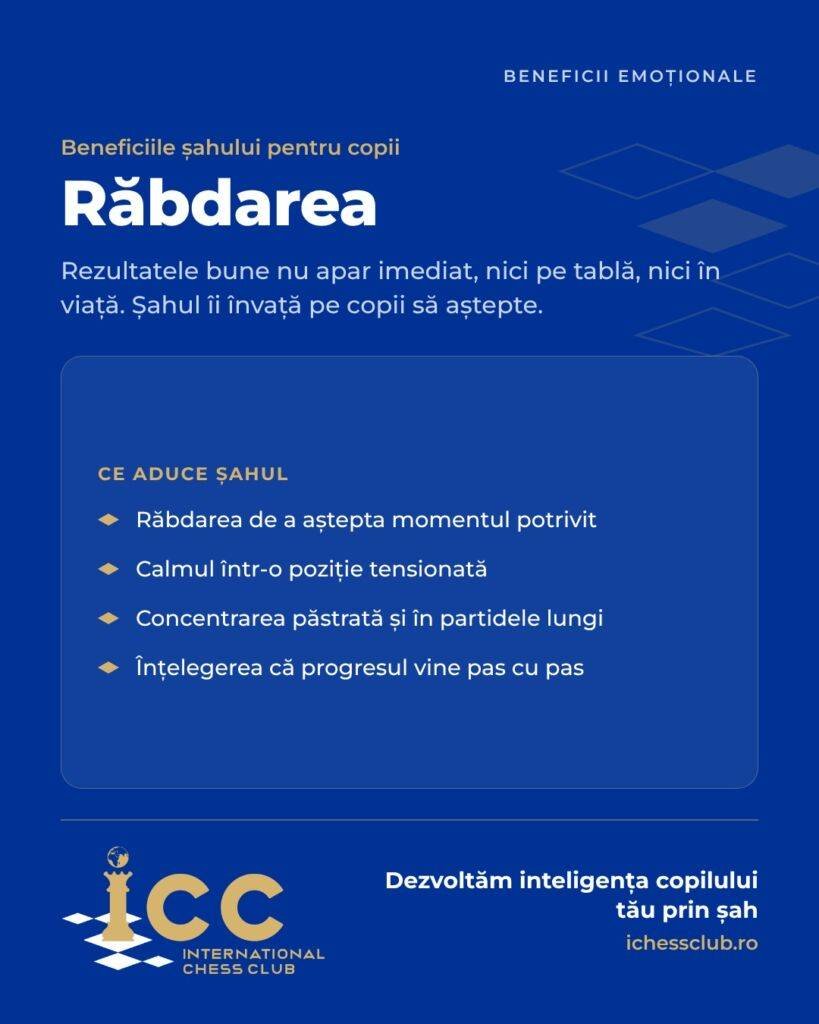
8. Patience
Good results don’t come straight away, on the board or in life. Chess teaches children to wait.
Read more
Not every attack has to start immediately. Not every piece has to move quickly. Sometimes you simply have to wait for the right moment.
In a world where almost everything happens fast, knowing how to wait and keep thinking is a valuable skill.
What chess brings
- The patience to wait for the right moment
- Staying calm in a tense position
- Keeping focus in long games too
- Understanding that progress comes step by step
 What chess brings ↻
Emotional benefits
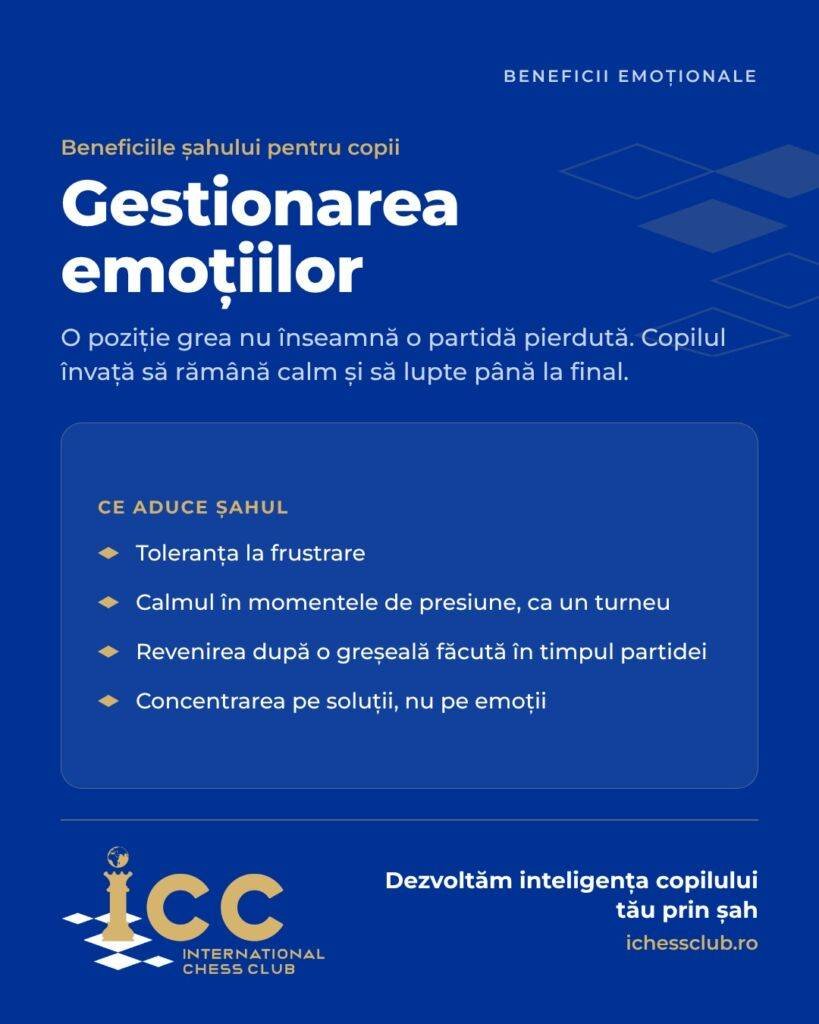
9. Managing emotions
A difficult position doesn’t mean a lost game. Children learn to stay calm and fight until the end.
Read more
Joy, excitement, frustration, impatience, disappointment: a child can feel all of them during a single game.
Chess gives them the chance to learn to recognise their emotions, calm down and keep making decisions even when things don’t go to plan. Emotions are natural. What matters is learning what to do with them.
What chess brings
- Tolerance of frustration
- Calm in moments of pressure, such as a tournament
- Bouncing back after a mistake during the game
- Focusing on solutions, not on emotions
 What chess brings ↻
Emotional benefits
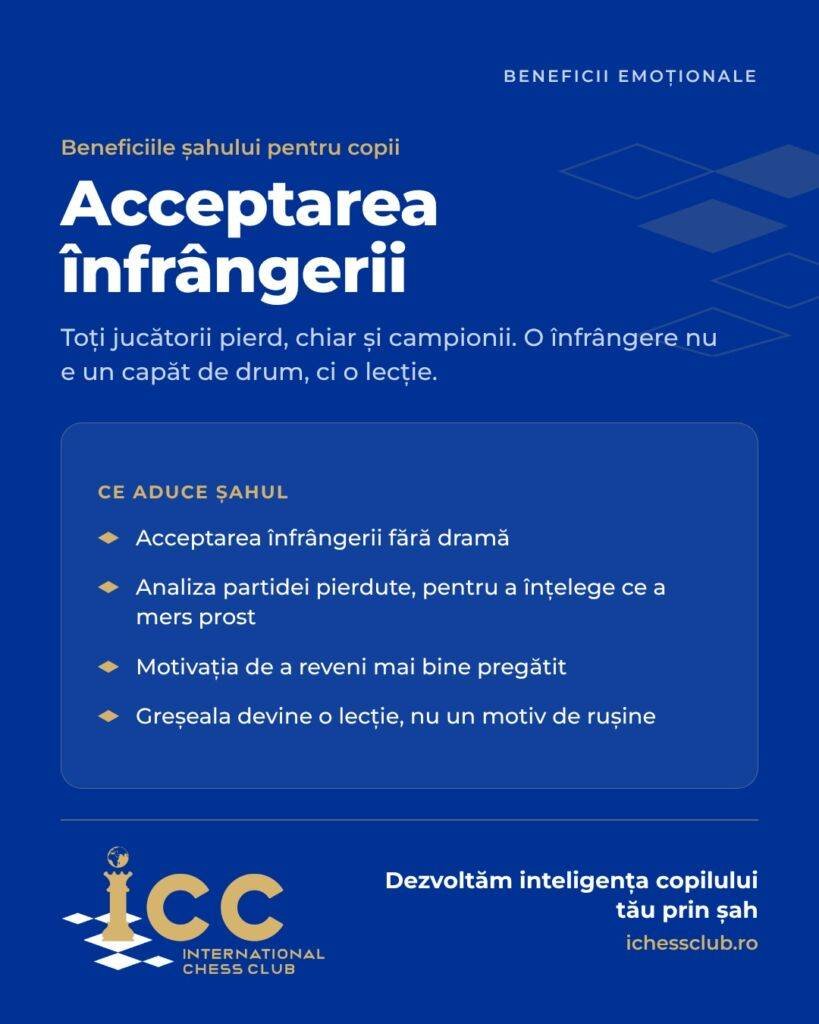
10. Accepting defeat
Every player loses, even champions. A defeat isn’t the end of the road, but a lesson.
Read more
Losing isn’t easy for anyone, least of all a child. Chess teaches children to look at a lost game honestly and bravely: to analyse what happened, find the mistake and try again.
Losing doesn’t mean you’re not good enough. It means you had the courage to play, to learn and to keep going.
What chess brings
- Accepting defeat without drama
- Analysing the lost game to understand what went wrong
- The motivation to come back better prepared
- A mistake becomes a lesson, not a reason for shame
 What chess brings ↻
Emotional benefits
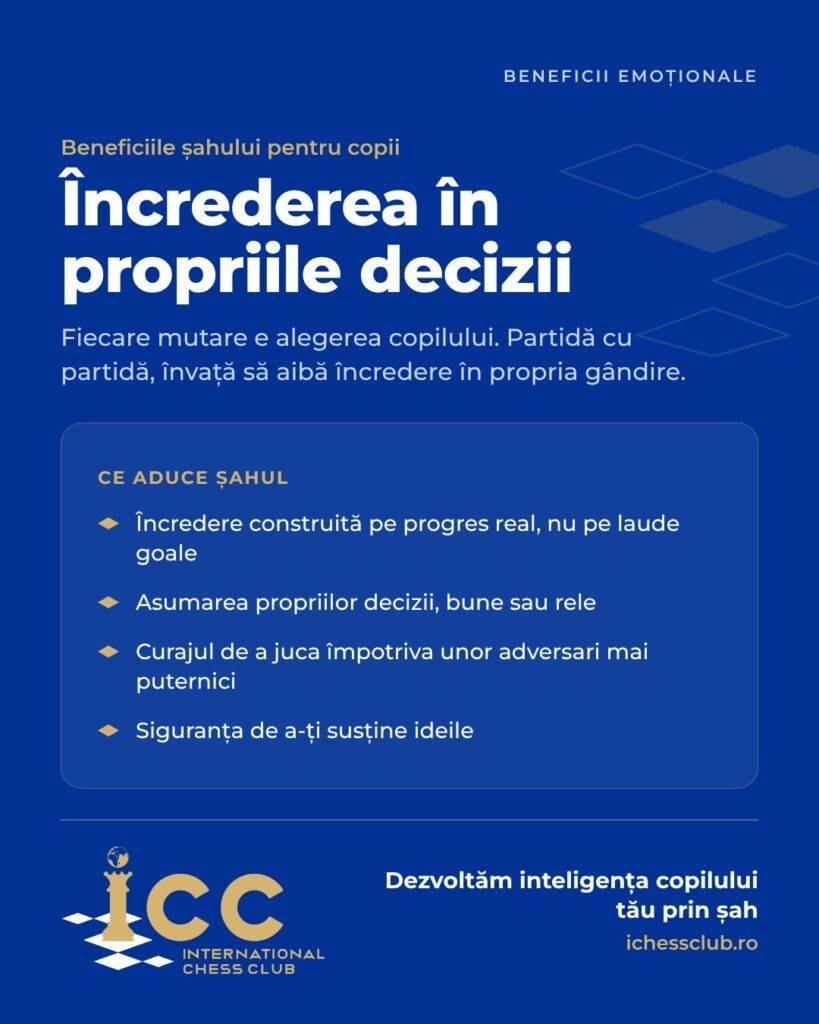
11. Confidence in their own decisions
Every move is the child’s own choice. Game by game, they learn to trust their own thinking.
Read more
During a game, neither the coach nor the parent can tell the child which move to make. They are alone at the board: they have to analyse, choose and then own their choice.
That is exactly what makes chess so valuable: children gradually discover that they can trust their own thinking.
What chess brings
- Confidence built on real progress, not on empty praise
- Owning their decisions, good or bad
- The courage to play against stronger opponents
- The confidence to stand up for their ideas
 What chess brings ↻
Practical benefits
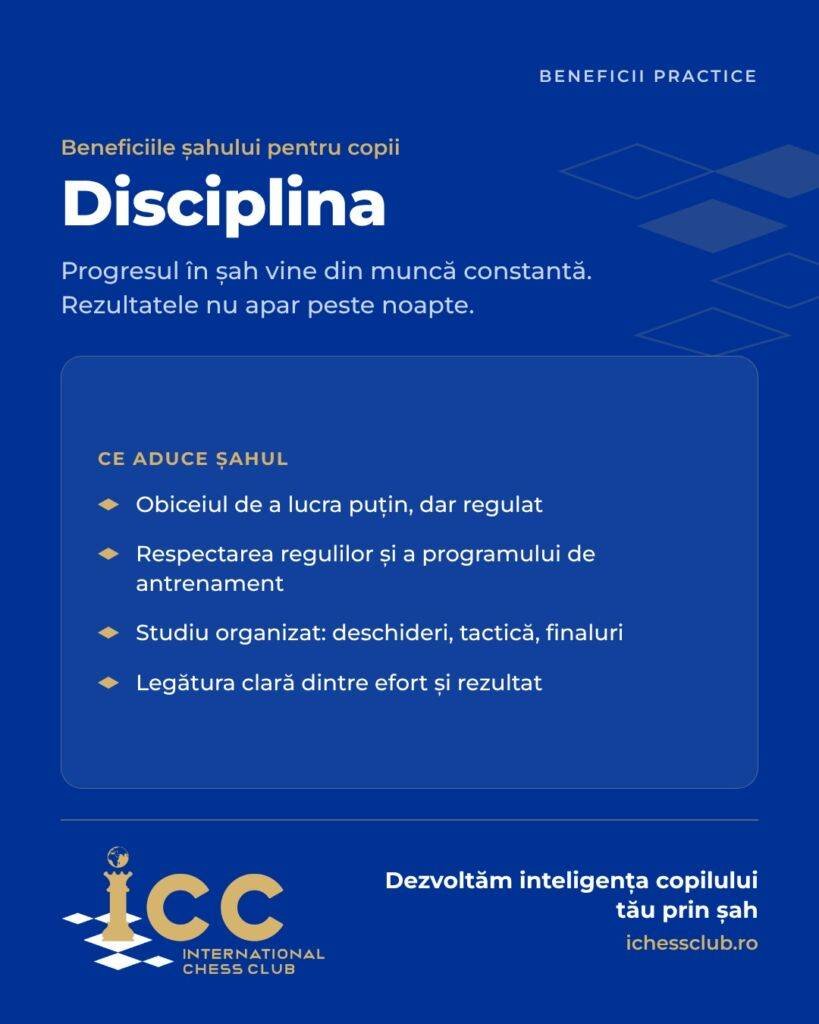
12. Discipline
Progress in chess comes from steady work. Results don’t appear overnight.
Read more
Talent helps. But real progress comes from consistency. Children discover that to get better they have to practise, follow rules, analyse their mistakes and keep going even when results don’t come straight away.
You don’t have to be perfect today. You have to be a little better than yesterday.
What chess brings
- The habit of working a little, but regularly
- Respecting rules and the training schedule
- Organised study: openings, tactics, endgames
- The clear link between effort and result
 What chess brings ↻
Practical benefits
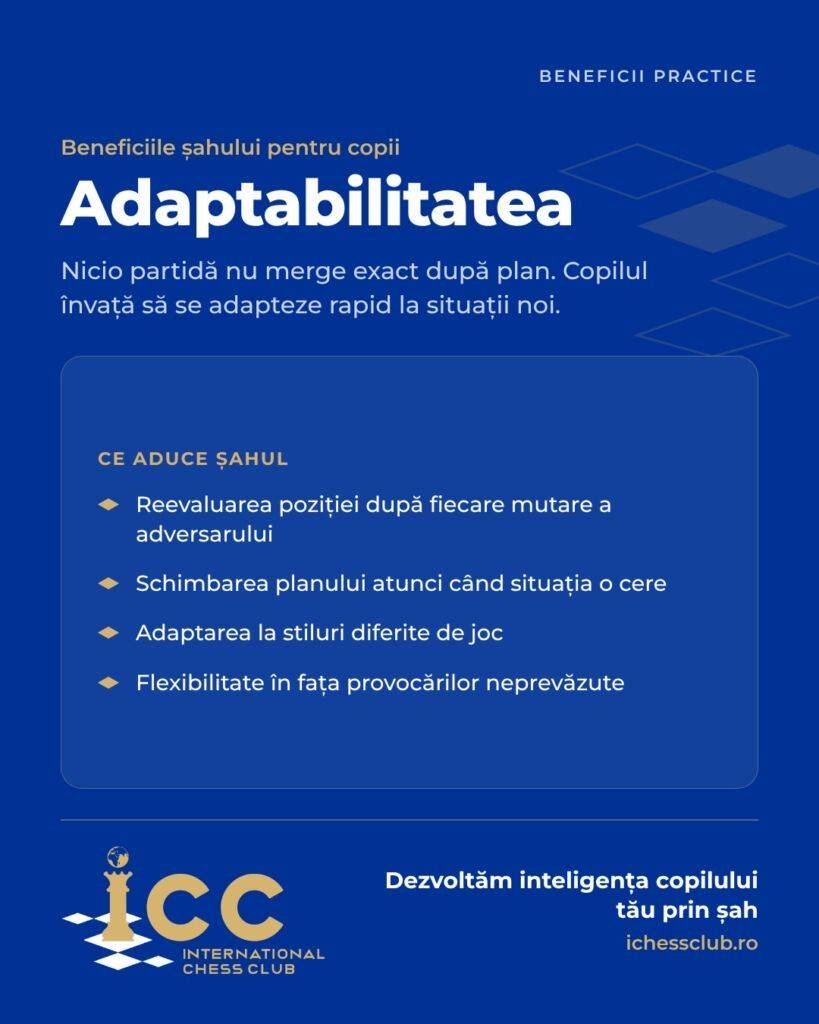
13. Adaptability
No game goes exactly to plan. Children learn to adapt quickly to new situations.
Read more
You made a plan, but your opponent has just played a move you didn’t foresee. In chess, children learn that sometimes they have to give up the original plan, reassess the situation and find a new solution.
Changing your plan when the situation calls for it doesn’t mean you were wrong. It means you adapted. And that is an extremely useful skill in life too.
What chess brings
- Reassessing the position after every opponent’s move
- Changing the plan when the situation calls for it
- Adapting to different playing styles
- Flexibility in the face of unexpected challenges
 What chess brings ↻
Social benefits
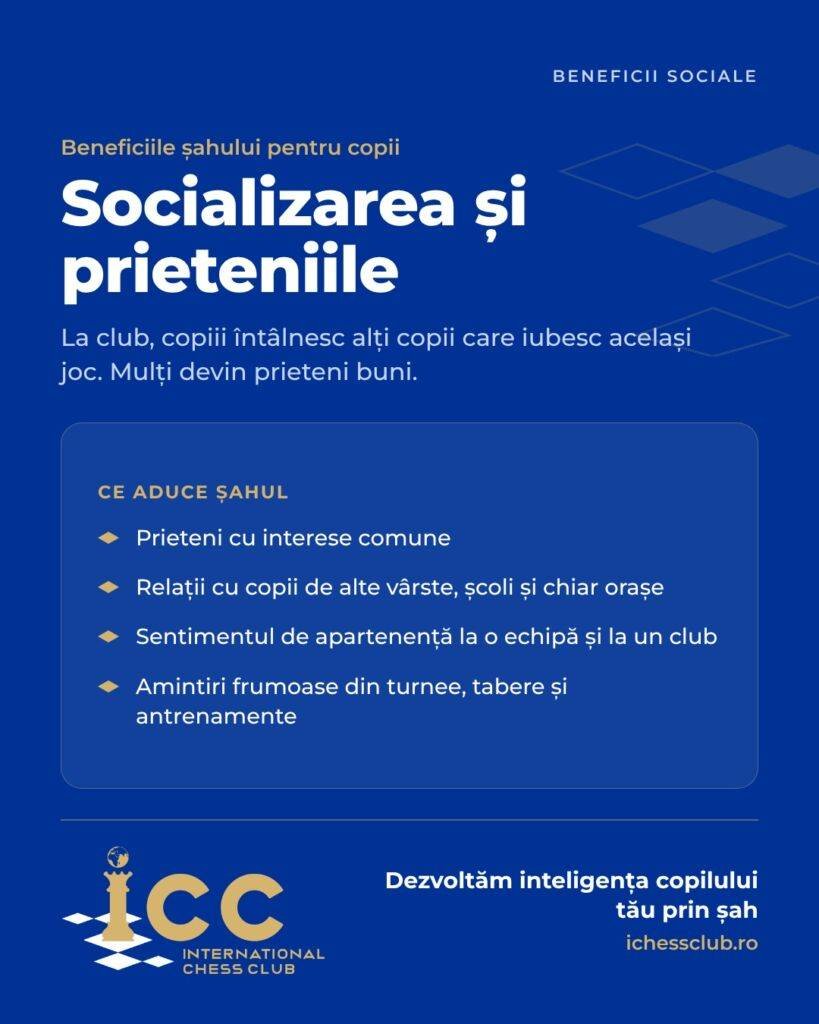
14. Socialising and friendships
At the club, children meet other children who love the same game. Many become good friends.
Read more
Chess looks like an individual sport, but a real community grows around the board. Children meet, play, discuss their games, take part in tournaments together and support each other.
Some games end after an hour. Friendships can last for years.
What chess brings
- Friends with shared interests
- Relationships with children of other ages, schools and even cities
- A sense of belonging to a team and a club
- Happy memories from tournaments, camps and training
 What chess brings ↻
Social benefits
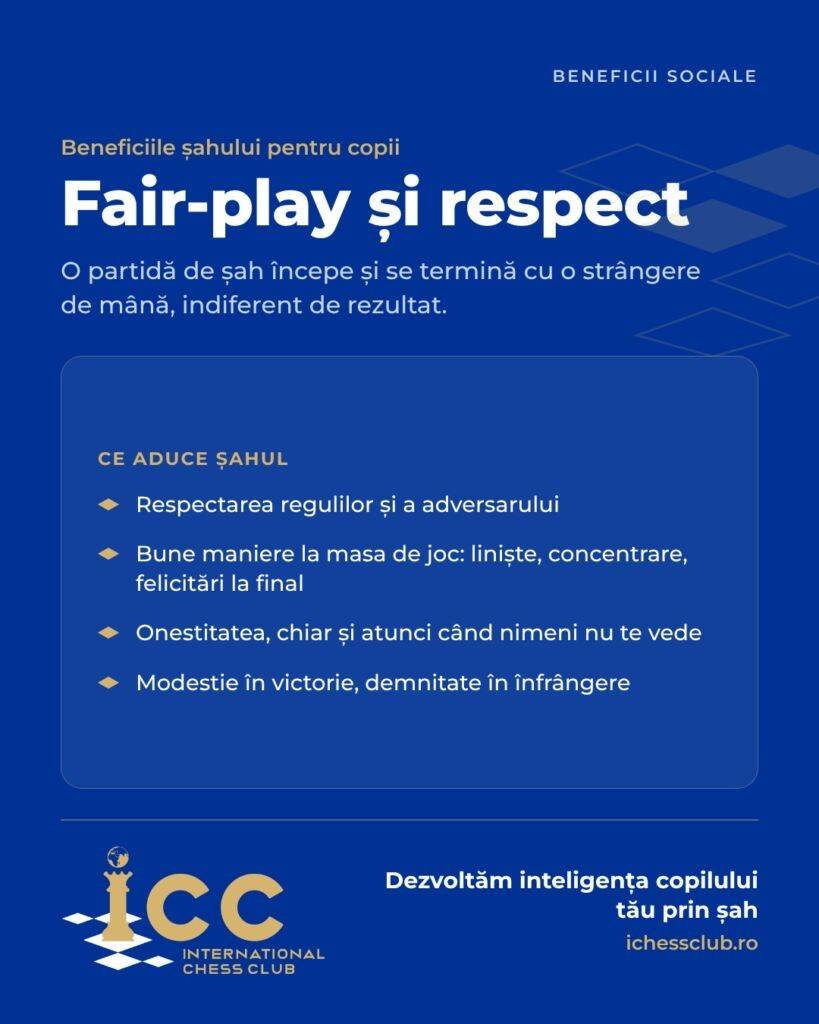
15. Fair play and respect
A game of chess begins and ends with a handshake, whatever the result.
Read more
We shake our opponent’s hand before the game. We respect the rules. We win without arrogance and lose without belittling the person across the board.
A trophy is lovely. But the character we build on the way to it matters much more.
What chess brings
- Respect for the rules and for the opponent
- Good manners at the board: silence, focus, congratulations at the end
- Honesty, even when nobody is watching
- Modesty in victory, dignity in defeat
 What chess brings ↻
Practical benefits
16. Independence
On the board, the child makes every decision alone. Step by step, they become more independent.
Read more
At the chessboard, the child has to think alone. Analyse. Decide. Own the choice. Make mistakes. Learn. And try again.
The goal isn’t to make decisions for children, but to prepare them to make good decisions themselves. And chess is a wonderful place to start practising that.
What chess brings
- The initiative to think and decide on their own
- Owning the consequences of their choices
- Responsibility for their own progress
- Confidence and independence off the board too
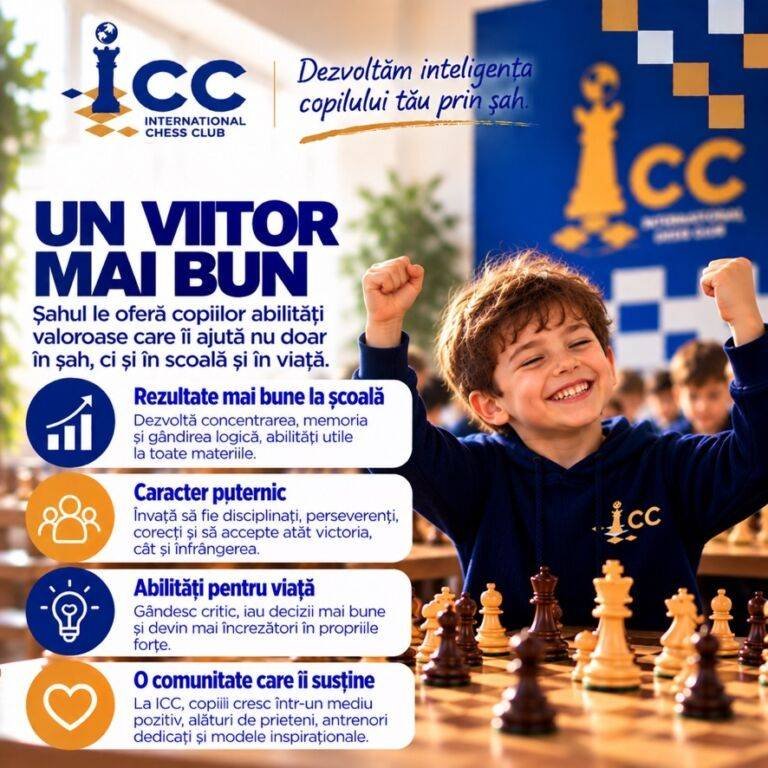
A better future
To stop before acting. To analyse. To make their own decisions. To accept that sometimes they will be wrong. To lose with dignity and win with modesty. To be patient, persevere and try again.
Not every child who learns chess will become a champion. But every child can take something valuable from the chessboard and use it at school, in their relationships with others and, later, in life.
At International Chess Club Iași, this is why we do what we do.
New · Our book
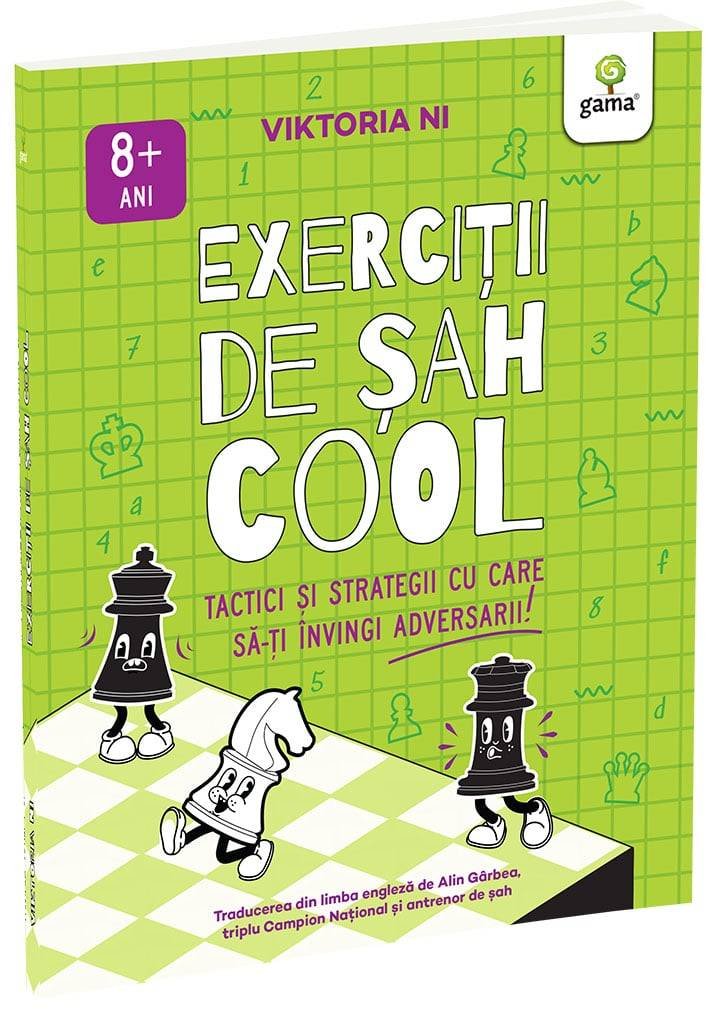
Exerciții de șah COOL (Cool Chess Exercises)
Together with Editura Gama in Iași, we launched the Romanian edition of the book by Woman International Master Viktoria Ni, translated by our coach Cătălin Alin Gârbea. More than 300 tactics and strategy exercises for children aged 8 and up.
Frequently asked questions
Find quick answers about International Chess Club
Essential information about our programmes, how we work and how you can get started.
What is International Chess Club?
International Chess Club is a professional chess academy offering structured, high-level training through club, online, private, school and corporate programmes, led by certified and experienced coaches.
Do I need prior experience to join?
No. Our classes are designed for all levels. You can start from scratch and progress step by step.
How do the online lessons work?
Lessons are live, on our interactive platform. You also get access to quizzes and courses tailored to every level.
Can I take part in tournaments?
Yes. We organise weekly online tournaments and monthly tournaments at the club, where you can practise and compete.
How do I access the online platform?
You can access our platform (the Virtual Classroom) for live lessons, quizzes and courses. To log in you need a username and password, which you receive after filling in the online classes registration form for the free session. You can also download the International Chess Club app, available on the App Store and Google Play.
Is there a free trial lesson?
Yes. You can try a group lesson for free before choosing a membership. Book your place.
Together for children
Our sponsors and partners
We thank everyone who supports the children of International Chess Club.
Sponsors


Partners


Experiences are better shared!
I warmly recommend it! My daughter is delighted and can’t wait for every next session!
My child is four and a half, and I’m amazed at how easily he remembers the rules. He can’t wait to take the mouse and move the pieces on the board himself. And he has made new friends!
Very professional, highly recommended!